
Henry Edward Roberts was a mustang. He had enlisted in the USAF in May of 1962, and at the age of 27, had gained his commission in 1968 after attending Oklahoma State University and earning a degree in electrical engineering. As a second lieutenant in the Air Force service at the Effects Branch of the Air Force Weapons Laboratory at Kirtland AFB, he’d been tasked with procuring a Hewlett-Packard 9100 programmable desktop calculator. He was immediately entranced by the machine.
Even at this time, Roberts wasn’t a novice in the realm of computation. In his teens, he’d been a hobbyist, and he’d built machines using digital logic implemented in relays. He’d even started and run two electronics businesses while in the Air Force: Reliance Engineering, and Reliable Radio. But neither the Air Force nor business were Ed’s goals. His first goal was money and that meant business, but that money was sought only to enable him to own a plane, live on a farm, and complete medical school.
A fellow officer, Forrest M. Mims III, was interested in model rocketry, and he wanted to make and sell small flashing light systems for night launches for rockets. Roberts, Mims, Stan Cagle (civilian electrical engineer whom Roberts knew from college), and Robert Zaller (another officer) met at Roberts’ house to discuss a line of products for rocket telemetry. By the end of that meeting, Roberts was elected president of whatever the company turned out to be. After a series of successive meetings, the name MIT Systems was decided upon due to its similarity to the school, and after that, Cagle suggested Micro Instrumentation and Telemetry Systems. As Reliance Engineering still existed, had a credit rating, and had legally existed, it was also decided that MITS would be a subsidiary of Reliance Engineering, but this didn’t happen. In late 1969, the company was incorporated in Albuquerque, New Mexico as Micro Instrumentation and Telemetry Systems, commonly referred to as MITS. Each of the four were given 950 shares and each contributed $100. Another 200 shares were given to the company’s attorney. The first product was the TLF-1 light flasher. The second was “The Booklet of Model Rocketry Telemetry” written by Mims. Transmitters and telemetry modules followed. Despite advertising in the magazine Model Rocketry, the company wasn’t moving a ton of product.
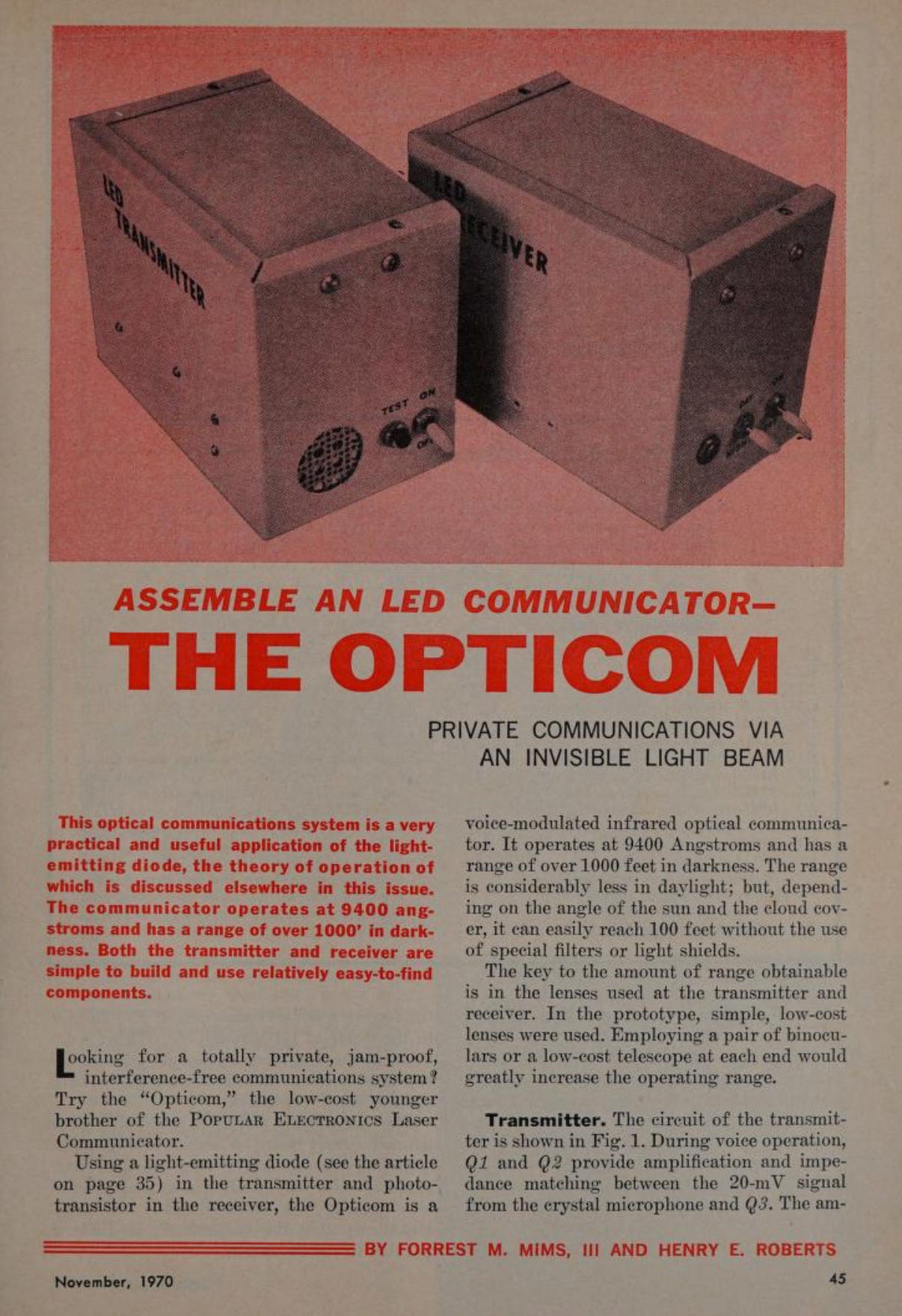
The group had realized that the market for model rocketry, being constituted primarily of professors and hobbyists, could not properly support a company. As the group had taken a rather severe pay cut to found, run, and work at MITS this wasn’t great. So much so, Zaller had to leave for a bit and get proper work to support his household. Mims and Roberts then had the bright idea to build electronics. The first of these was an infrared voice communicator called the Opticom. The first transmitter and receiver pair was completed that summer, financing to build around a thousand kits was obtained from a friend, and Mims managed to write an article about the construction, operation, and modification of the devices for Popular Electronics receiving a check for $400 (this was large sum, adjusted for inflation to May 2026 ~ $3433). This article was also a good bit of advertising for the young company’s product. Orders began coming in.
Roberts, it would seem, could not get past that desktop calculator. He began working on a kit calculator immediately after having helped finish the Opticom. Meanwhile, Stan Cagle began working on an infrared intrusion alarm kit and a solid state laser kit. These diverging paths created quite a bit of tension, and while Cagle and Mims were contemplating buying out Roberts’ stock, things materialized the opposite way. On the 10th of November in 1970 at a meeting at the Sunport in Albuquerque, Roberts offered to buy the others out for a combination of $300 cash, another $300 the following March, and $350 in equipment. Cagle and Mims accepted. After all, they’d never even drawn a salary from the fledgling company. Before the two had even signed the agreement, Roberts had recruited engineer Bill Yates (second lieutenant from the Laser Division at the weapons lab), and a fresh investment from another officer. The company moved from a former sandwich shop to Roberts’ garage, and then to a rented house on 2016 San Mateo.
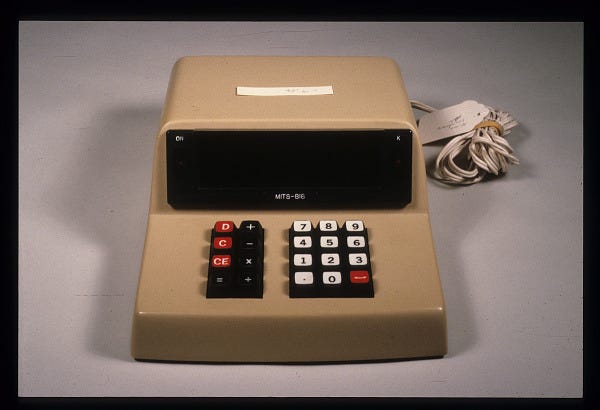
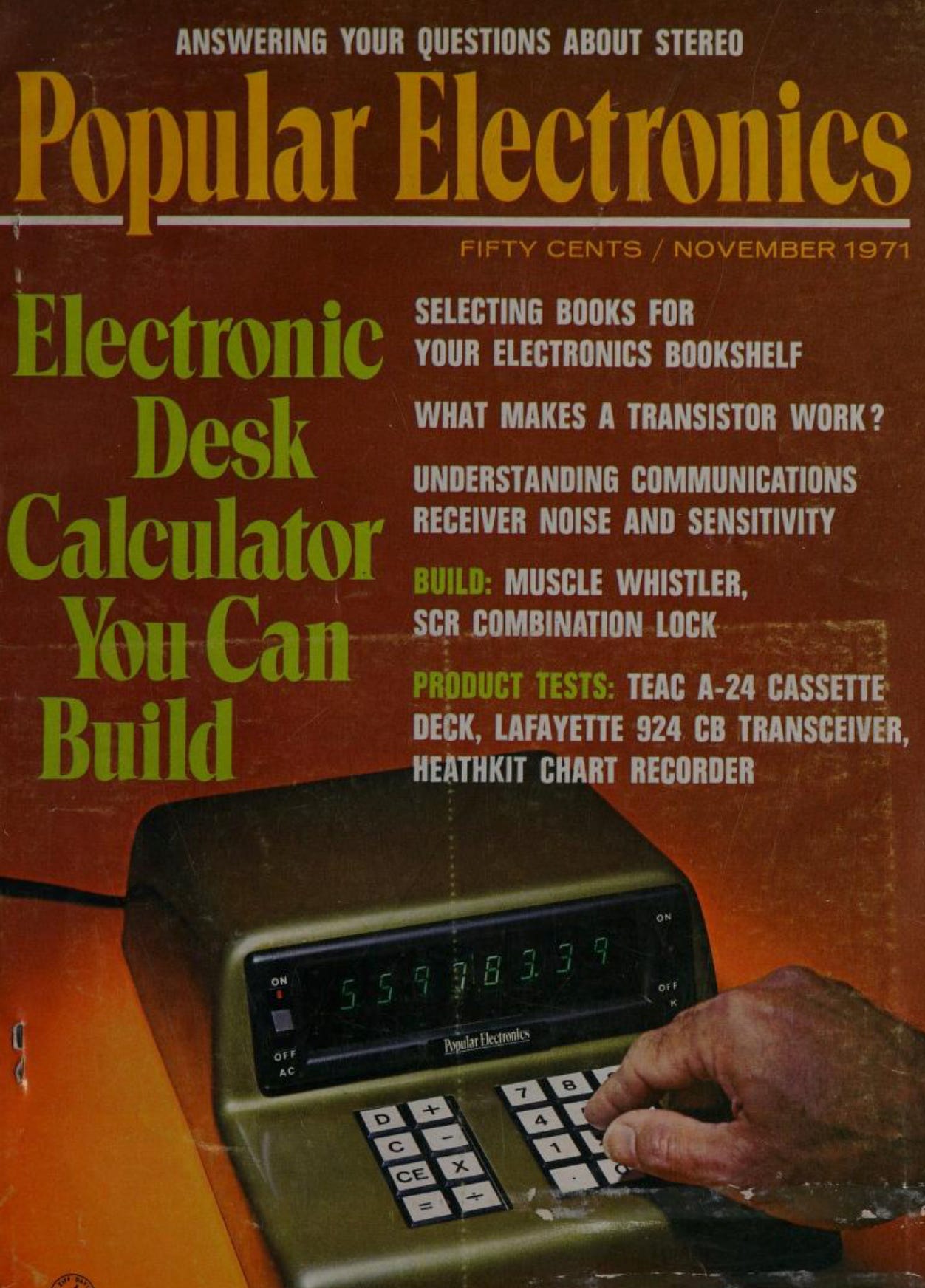
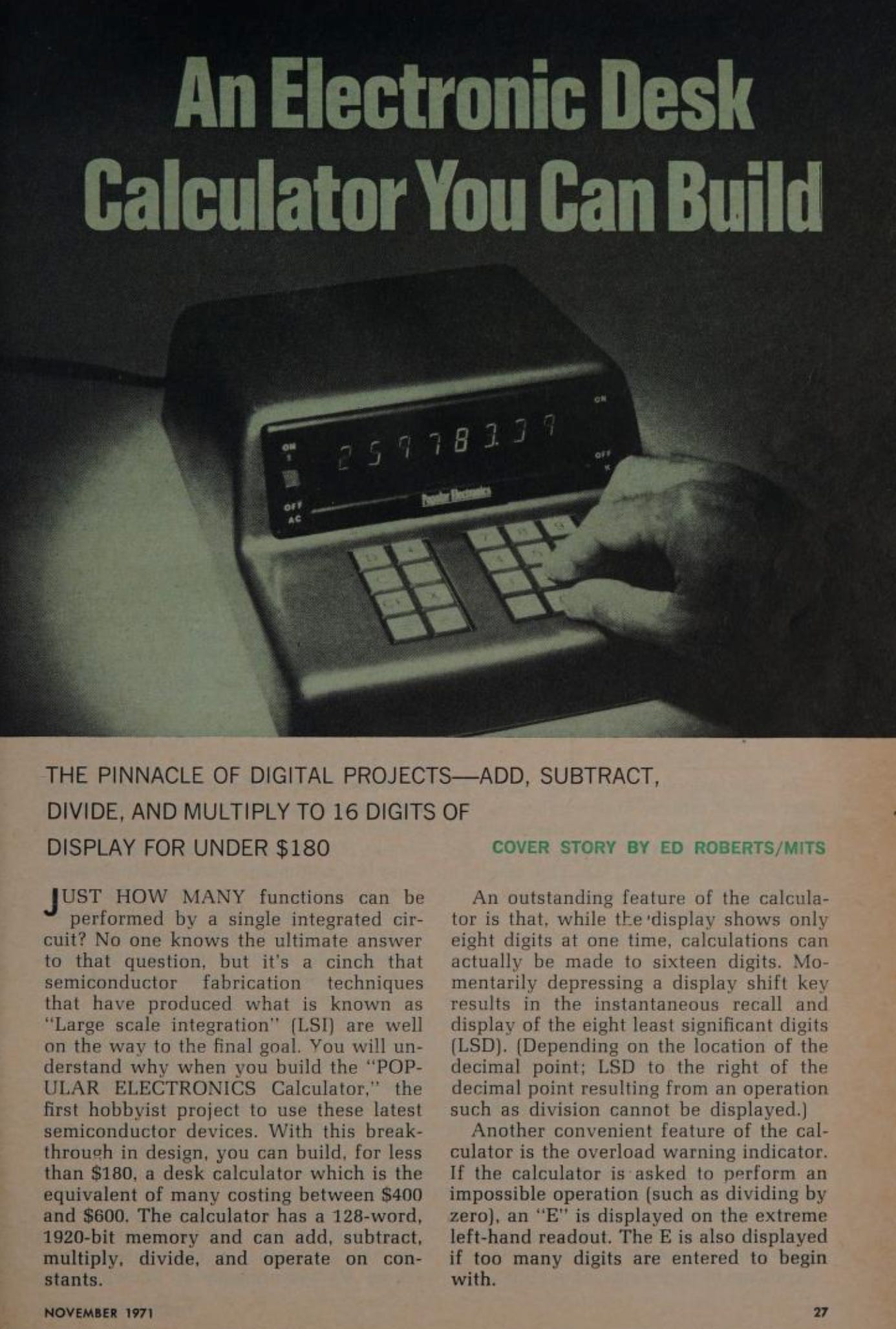
For his part, Mims became a freelancer around August of 1971, sold some solid state laser articles to Popular Electronics, and wrote the manuals for the laser kit at MITS as a freelancer. The manuals were good, and Roberts asked Mims to write the manual for the calculator project in exchange for one of the calculators. The calculator was completed in 1971 and appeared in Popular Electronics in November that year, just a month after the laser article had debuted.
The 816 was offered as a kit for $179, assembled for $275, with parts and boards available for purchase separately if needed. Circuit diagrams and other technical instructions could be purchased for just $2. The 816 was a major success for the company, and they finally turned a profit. Despite this success, Roberts wasn’t done. Before the machine was completed and began shipping, he had a 32-step programming unit that would make the 816 a programmable calculator (this was made into a product that could connect to the 816 or 1440). He also began thinking about building a microcomputer, but he found the 4004 and 8008 to be insufficient.
The house the company was working out of was scheduled for demolition to widen the street, so MITS moved to 5404 Coal Avenue, and they then later moved to 6328 Linn Avenue. With more space, the company hired technical writers and a receptionist, but more importantly for history, this space allowed the company to more quickly and efficiently put machines together. More calculators followed from those with more digits, to handheld calculators, to scientific calculators with trigonometric functions. They were doing well, but success is a signal to the market of money to be had. Competitors moved in, and by 1974, MITS was carrying around $200k in debt (about $1.3 million in 2026 dollars).
MITS had evolved into a legitimate consumer product manufacturer by this point, and they knew how to build, market, sell, and deliver products. Roberts decided that it was time to make a far more powerful, more ambitious product, and he knew that his company was capable. The Intel 8080 launched in April of 1974, and this provided Roberts’ one of things he’d need for a more powerful product, a microcomputer. Meanwhile the editor over at Popular Electronics asked if the company could have a microcomputer project ready by January of 1975. Roberts and Yates began working on a prototype with interface logic for the 8080, 256 bytes of RAM, a 2MHz clock, front panel logic for 25 input switches and 36 LEDs. The most important piece was decided by Roberts quite early in the project’s life; the machine would include an open bus allowing for additional memory and peripheral cards after the initial assembly. The cabinet could hold 16 cards, and this meant that a rather strong power supply would be required. They fitted what they thought would be sufficient, but they underestimated. No one had really tried something quite like this before. The completed prototype was shipped to Popular Electronics, and in August, Roberts flew to New York to demonstrate the machine to the editorial staff. Sadly, that prototype was lost or stolen at Kennedy Airport, so Roberts was left to just spread out the circuit diagrams and explain the machine. This wasn’t too well received, and Roberts didn’t feel great on the way home. He had no guarantee that Popular Electronics would publish the article, and he’d need to borrow money to get the machine built. Still, it was try or allow the company to go bankrupt since calculators were no longer profitable. Roberts secured another $65,000, and he sent a non-functional case to the magazine for photography. A second prototype followed in September, it arrived safely, and it worked.
Product names at MITS were normally quite straightforward, but this product was different. The VP of marketing, David Bunnell, suggested Little Brother. Roberts eventually called it the PE-8. Les Solomon over at Popular Electronics is credited by Mims with having said that PE-8 was a dull name. He discussed the name issue with two members of his team, Alexander Burawa and John McVeigh, and they came up with Altair. A separate story credits Solomon’s daughter with having said they should name the computer Altair because the USS Enterprise was heading there that night (a rerun of Star Trek, Amok Time). In any case, it would seem that someone Les Solomon knew was responsible for the naming of the Altair 8800. The article ran in the January 1975 issue of Popular Electronics (this meant December of 1974 for those too young to know how print magazines used to work).
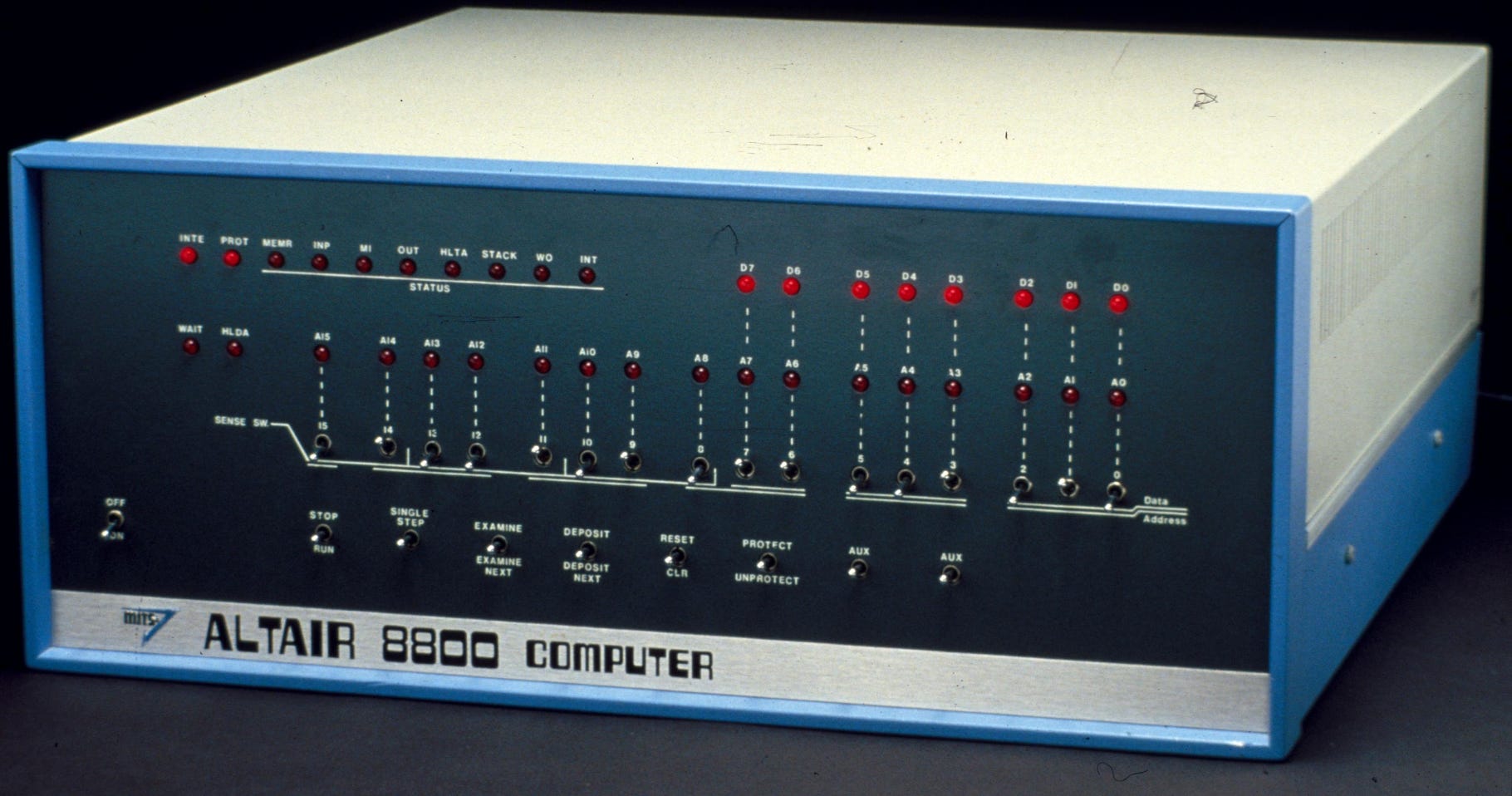
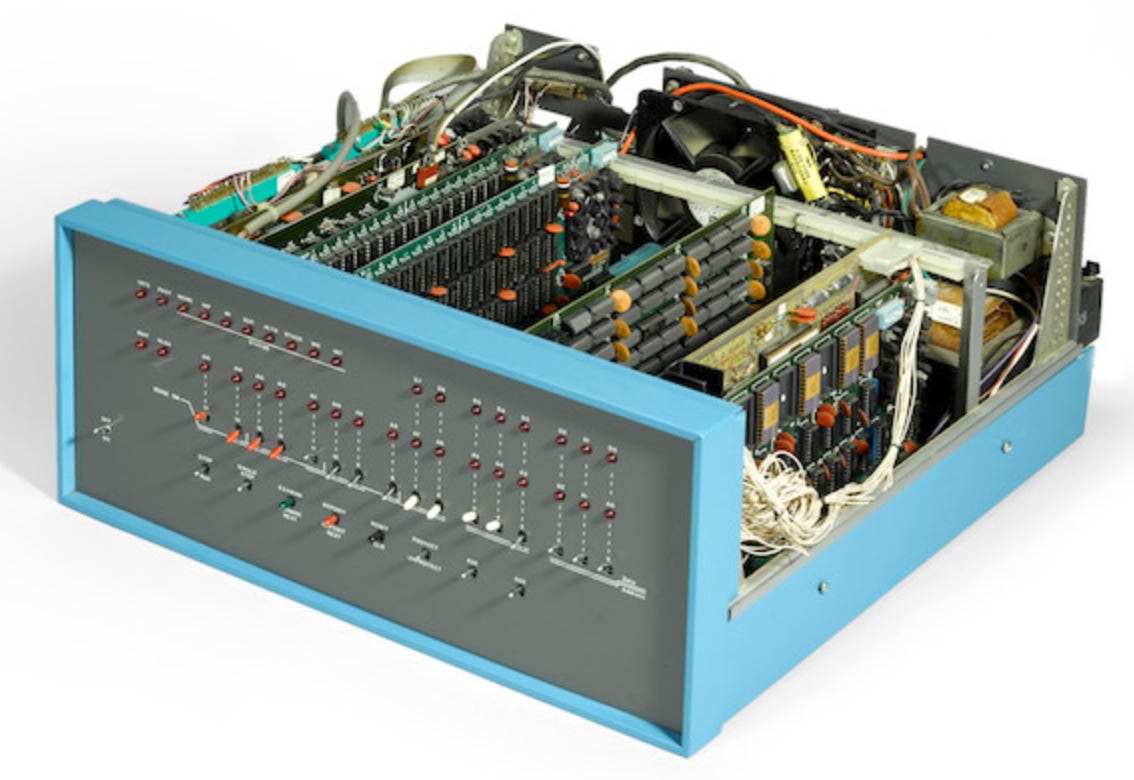
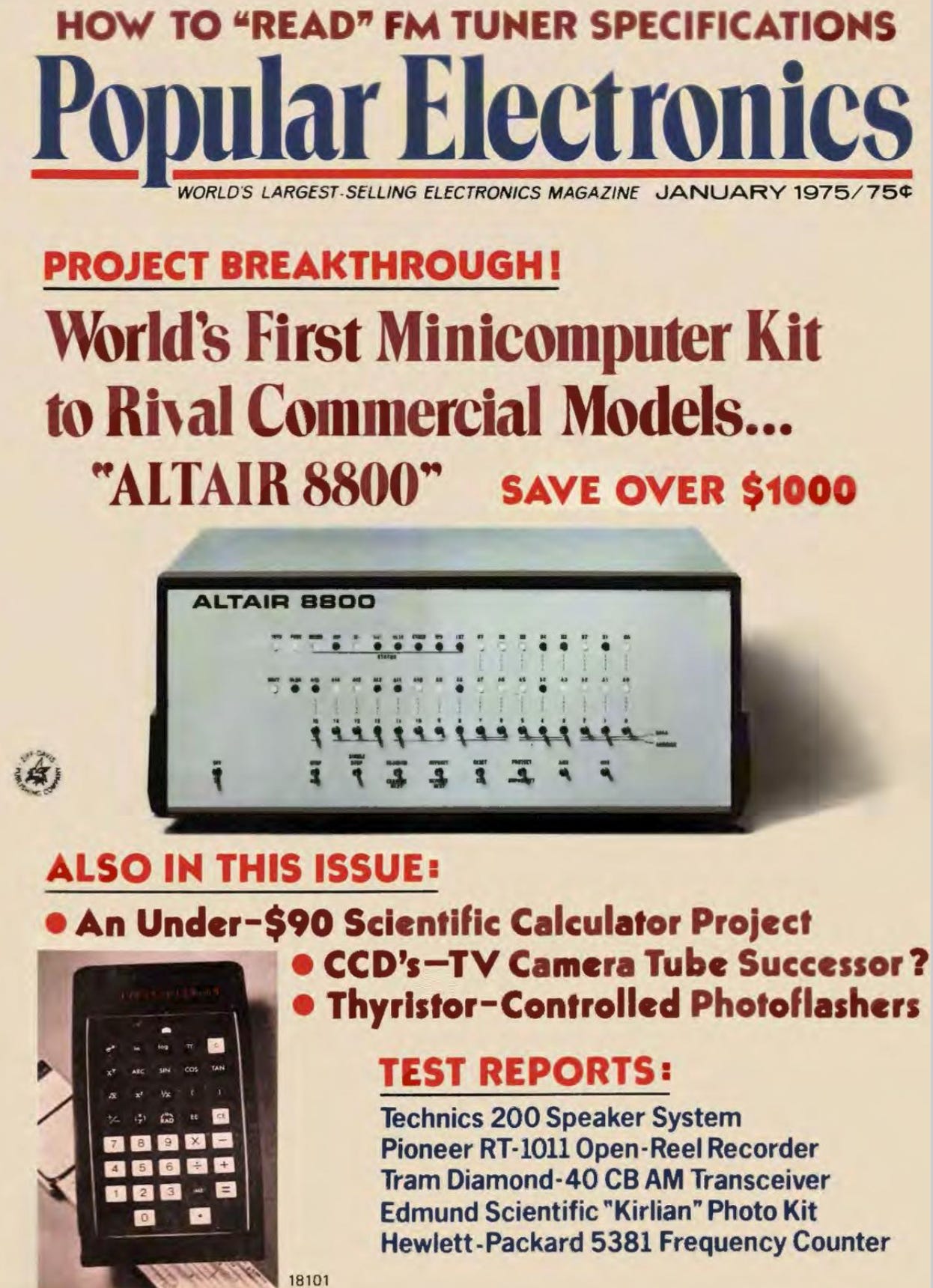
The response to the article was huge. By February, the company had received just over 1000 orders. While the initial shipping time was set to 60 days, the company had not anticipated the number of orders they were going to receive. While the company did have delays on orders, Roberts strategy was to focus on the computer itself first. This is… fine, except that the Altair 8800 was nearly useless without expansions. By the end of May, 2500 Altair 8800s had been delivered. At launch, an Altair 8800 was available for $397 as a kit, or $498 assembled.
Paul Allen and his friend, Bill Gates, had run a company called Traf-O-Data while attending Lakeside School, a private highschool, in Seattle. That highschool had a club, the Lakeside Programmers Group, which got free time on some large computers in exchange for writing software. Gates and Allen saw a business opportunity. In the 1970s, if a municipality wanted to know traffic flows on roads, they’d put sensors out that tracked the number of axles and the timing of each axle, and that data would be recorded by punching paper tape with a 16bit pattern. Paper tape readers existed, the Intel 8008 existed, and the two thought that they could process the data more quickly and more cheaply than the companies already engaged in that business. Both of them lacked the hardware and they didn’t know how to build it, but they knew software quite well. After his graduation, Allen went to Washington State University, and he was able to get time on a PDP-10. Allen wrote an 8008 emulator, and Gates, who’d gone to Harvard, wrote the other pieces. They then hired Paul Gilbert to handle hardware. Over 1972, Gilbert built a working microcomputer around the Intel 8008, and Allen’s emulator was good enough that the software worked when run on the real chip. While they’d hoped to make and sell the machines with the software preloaded, this never worked out. They did manage to make some money processing the tapes, but this ended when the State of Washington began offering free traffic processing to cities and municipalities.
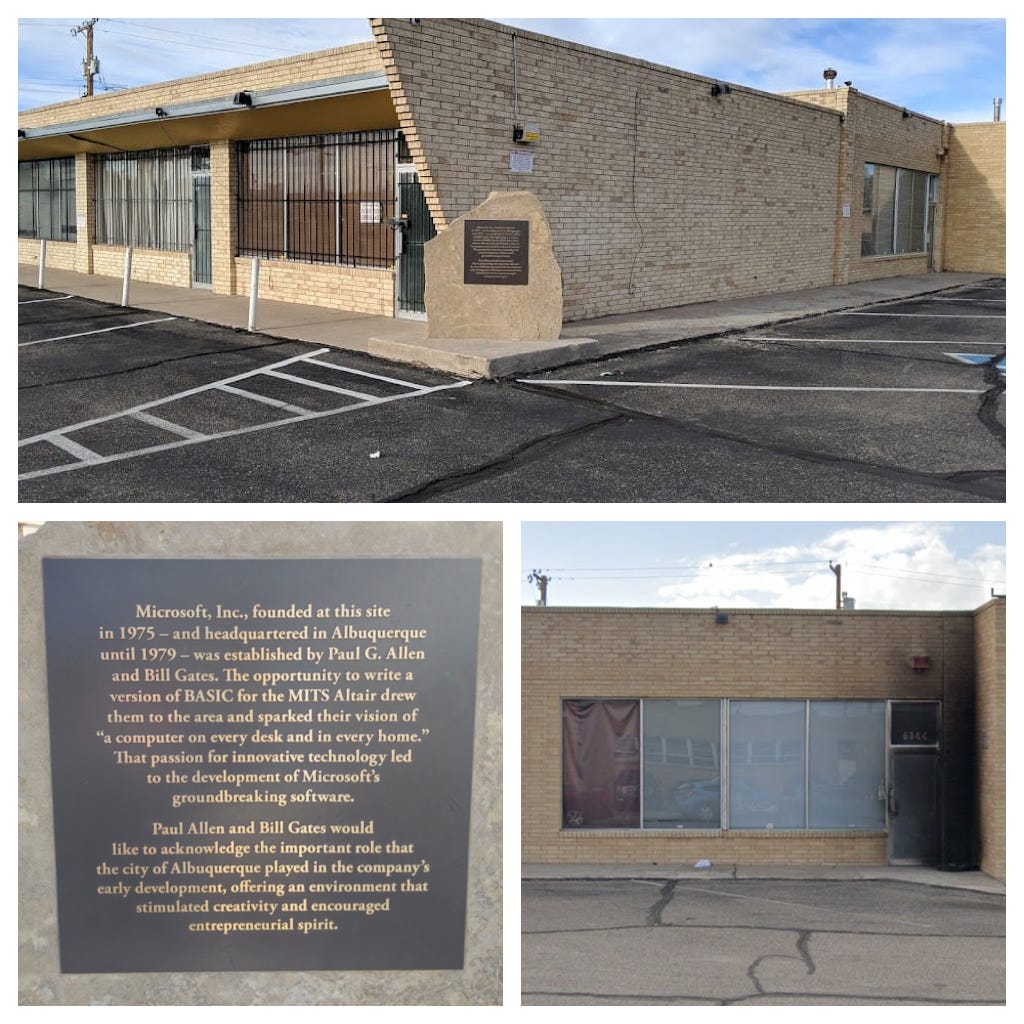
Among the many people who read that Altair article was Paul Allen who recommended to Gates that the two should make a BASIC interpreter for the Altair. Having written an emulator for the 8008, Allen began modifying his old software to emulate the 8080 and specifically the Altair using only the manuals for reference, Gates began writing the interpreter, Monte Davidoff worked on floating point, and the three worked from shortly after the article’s release until March of 1975. The interpreter, I/O system, and line editor, fit in just 4K RAM. Gates called MITS claiming that they had a working BASIC, and he setup a meeting. They then punched the software onto paper tape, and Allen got a plane to Albuquerque, New Mexico. Of course, they’d gotten ahead of themselves a bit. They had BASIC, but they did not have a bootstrap loader. No worries though, because Allen managed to write one in 8080 assembly while on the flight. The loader, the interpreter, and the I/O routines all worked flawlessly when demonstrated. Microsoft was formally established on the 4th of April in 1975 with gates as CEO, and the headquarters were physically in the same building (but around the corner) from MITS. This first version of Altair BASIC was later referred to as 4K BASIC as it could run on a 4K RAM machine with 790 bytes available to program code.
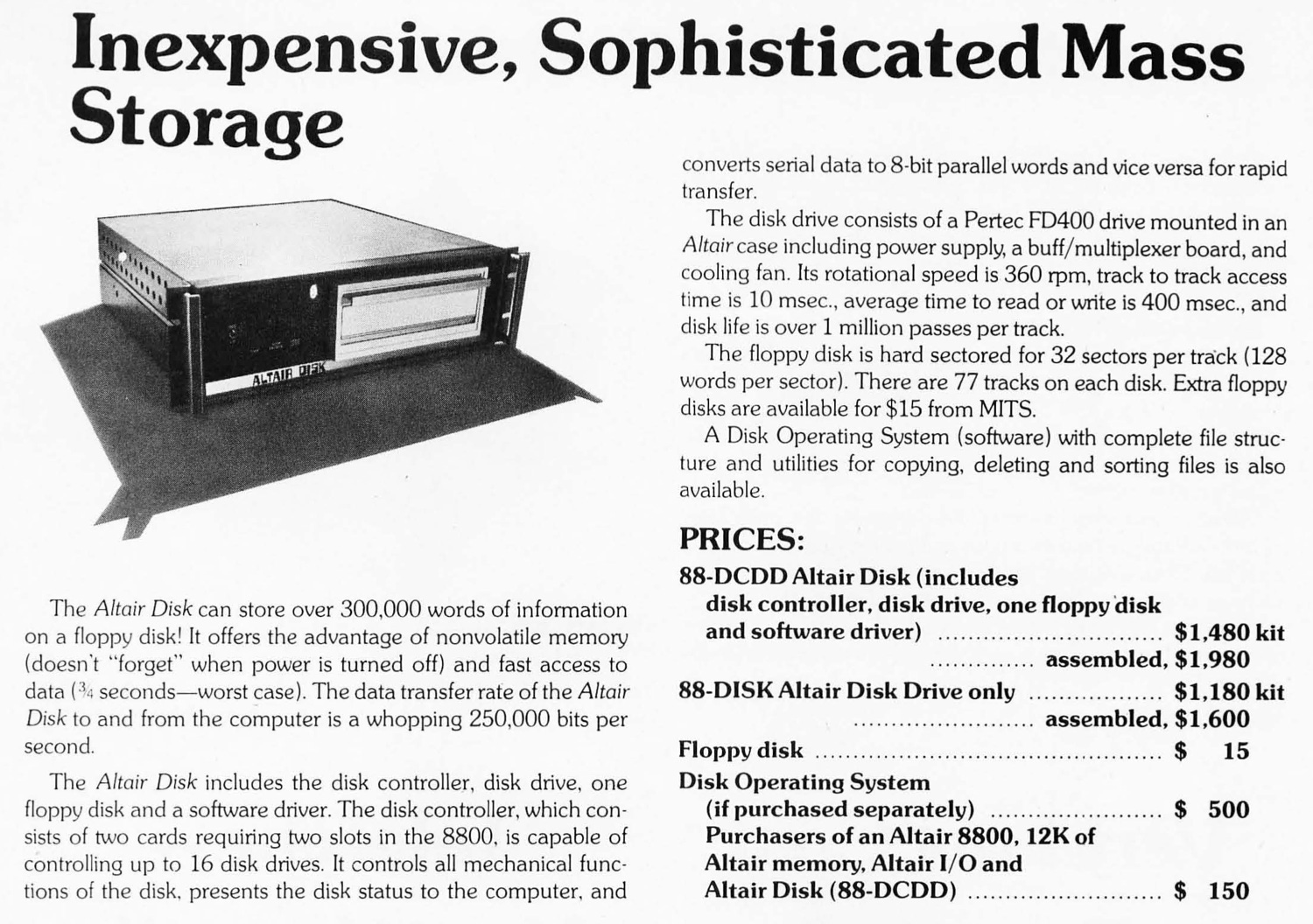
By December of 1975, prices had increased. Of course, the base system now included BASIC, enough memory to accommodate BASIC, and the Altair’s bus had become the standard for home microcomputers as the S-100; a standard for which more than 300 peripheral adapters were now available. At this time, an Altair kit cost $439, assembled $621. For memory costs, a 1K RAM kit was $97, 2K was $145, 4K was $195, serial interfaces were $119 or $124 depending upon the type, a parallel interface was $92, and a cassette adapter was $128. Every listing from the era shows the kit price more prominently, and this follows information I can find. Most of these machines were sold as kits. Partially, this would be due to economic conditions of the time, and partially, this would be due to most home computer users being hobbyists and tinkerers. By this time, there were now multiple BASIC varieties for the Altair. 4K BASIC was available for $150, 8K BASIC was $200, Extended BASIC was $350 and required the user to have at least 12K RAM. A text editor, assembler, and system monitor was available for $175. The Altair Disk was an eight inch floppy disk drive, and it cost $1480 as a kit.
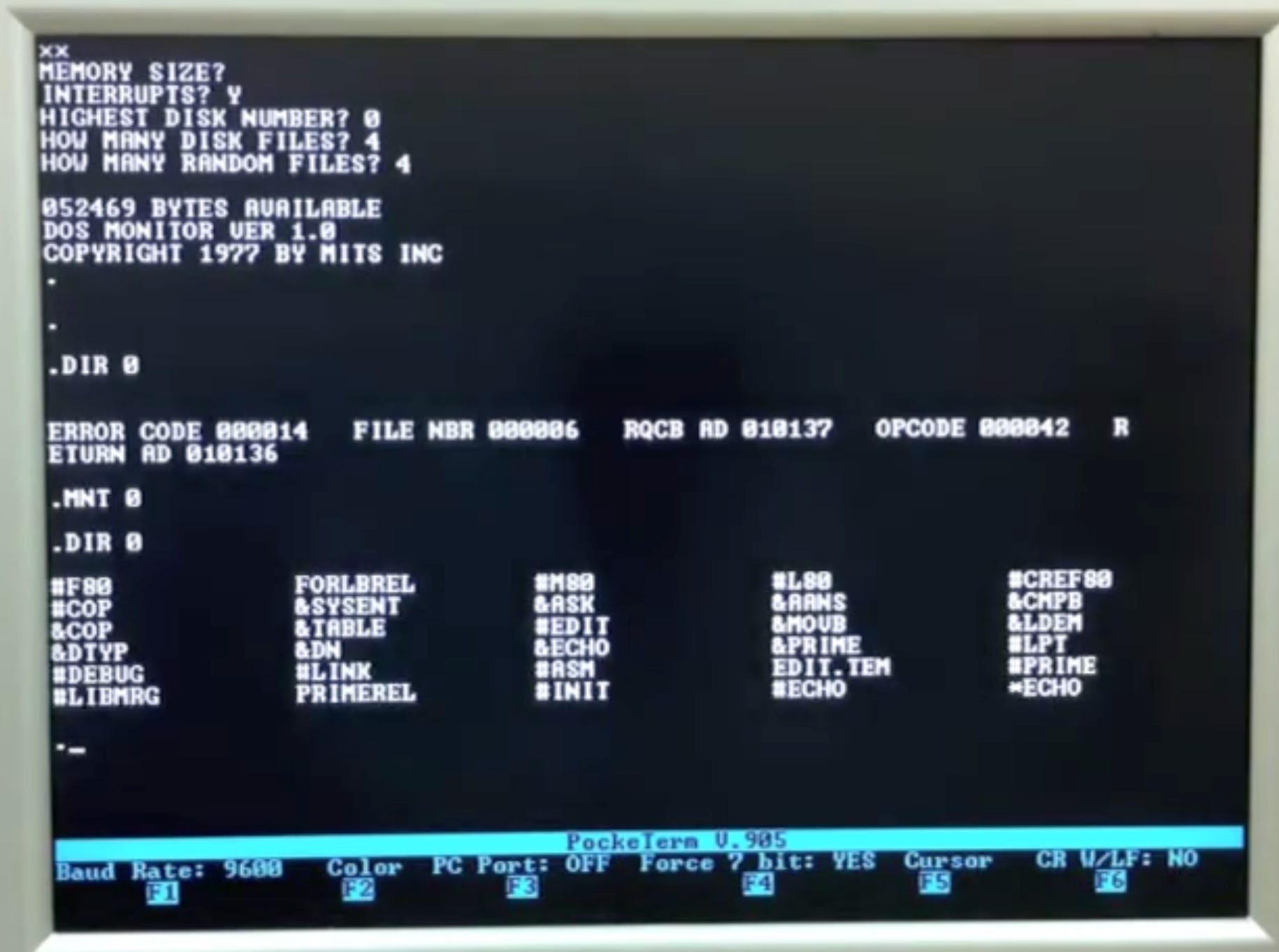
The Altair DOS that made this more easily usable was another $500, but it wasn’t available until 1977. Also, saying more easily usable is a little ridiculous. The user would still have to toggle front panel switches to load the OS, and these switches entered binary code.
The late release of Altair DOS was problematic. Gary Kildall had been working on CP/M and had done a sort of limited release of version 1.3 of his operating system in 1977 at the West Coast Computer Faire. In 1975, Gary Kildall began working with IMSAI who released the IMSAI 8080 in December of 1975, and they released CP/M for this machine in 1977. The IMSAI was an S-100 bus machine with an Intel 8080. Version 1.4 was broadly available to the market in 1978 and by this time, S-100 bus systems build around the Intel 8080 running CP/M were a sort of standard for the industry. With this came standardized software packages such as WordStar, SuperCalc (clone of VisiCalc originating on the Osborne), and dBASE.
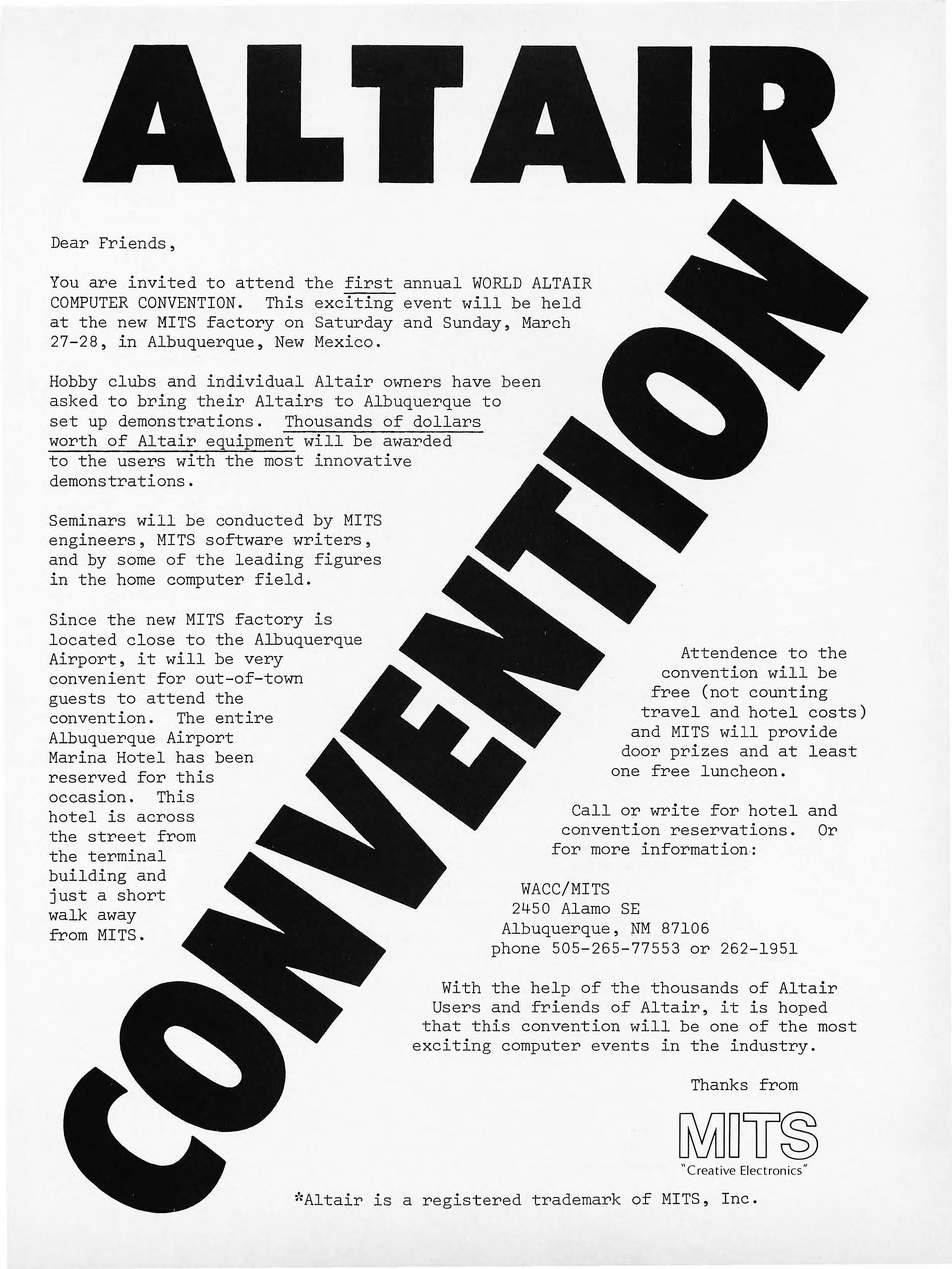
In March of 1976, David Bunnell organized the World Altair Computer Convention which took place in Albuquerque, New Mexico. This was, as far as I can find, the world’s first personal microcomputer conference, and it was a success given the relatively small market size. In total, 7 countries were represented, 46 US states were represented, and total attendance was 700 people.
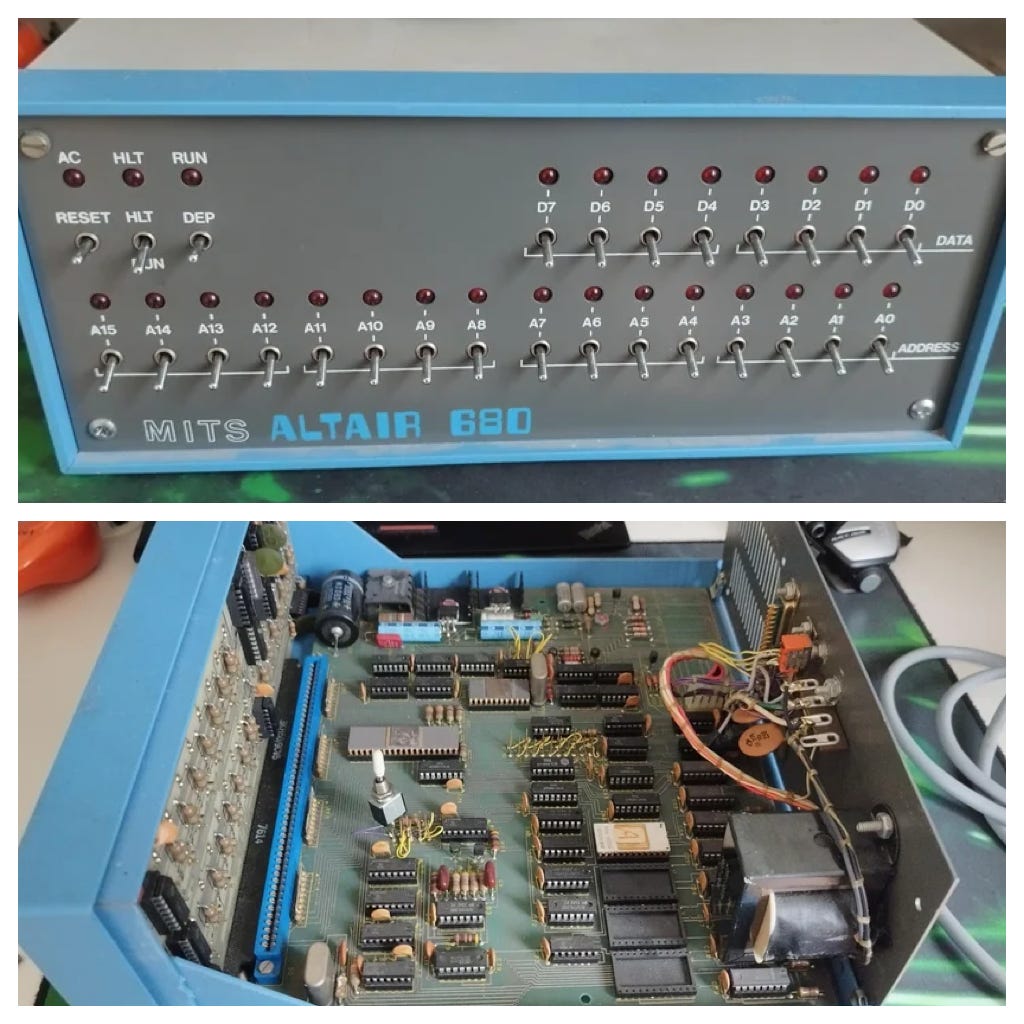
In October of 1975, MITS announced the Altair 680 built around the Motorola 6800 at 500kHz. The machine saw some delays, and it didn’t ship until May of 1976. The computer was physically smaller than its predecessor and this likely lent to its popularity as a machine controller. With the single 100pin expansion slot, risers were common and cards would lay horizontally inside the chassis. These cards had to be physically smaller than those for the 8800, and they were not compatible with the S-100 standard. With a CPU that was incompatible with the 8800, largely incompatible expansion cards, and less overall expandability, the 680 was never as popular as its older sibling. This machine was incredibly important to history none-the-less. Microsoft was once again asked to create a BASIC for it. Ric Weiland handled the translation from 8080 to 6800, and the resulting language interpreter was licensed to MITS for $31,200. Later, Weiland and Marc McDonald used the 6800 port as the basis for the 6502 port that was licensed to Commodore and Apple.
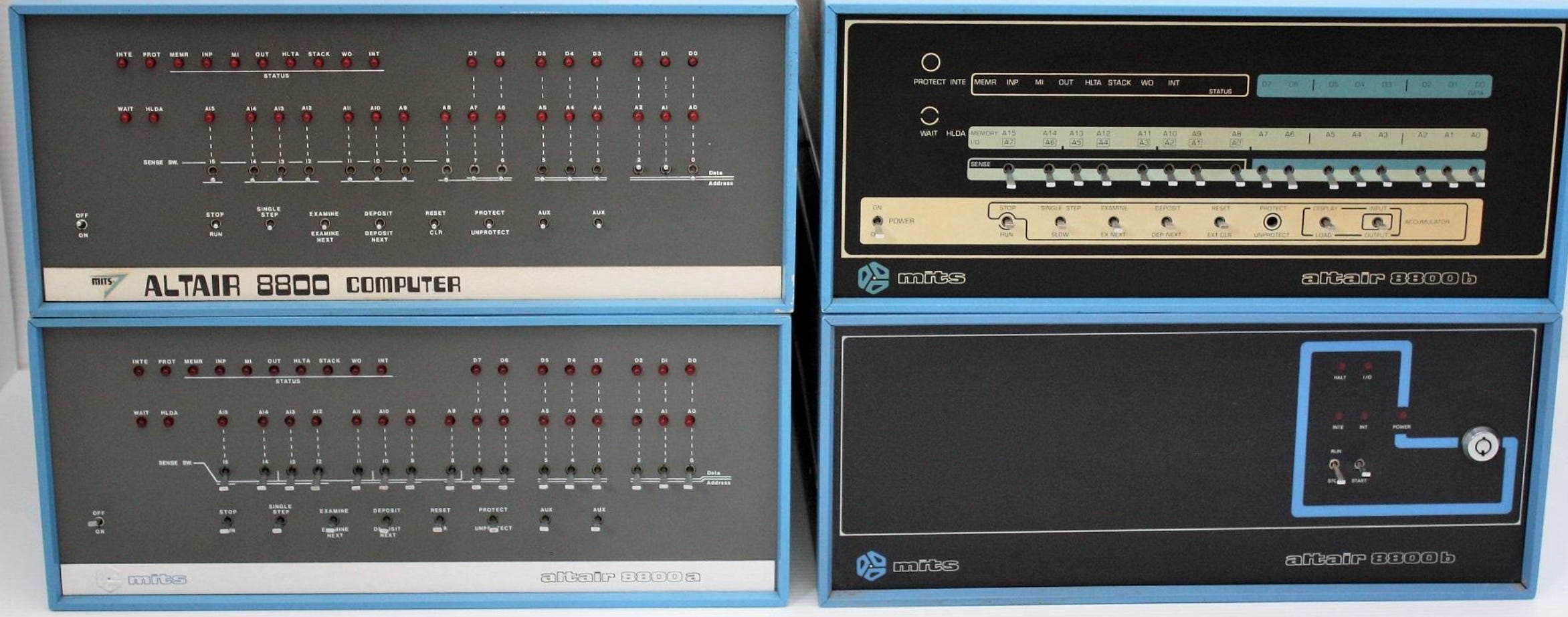
While iterations on the design of the 8800 were quick in coming, so were competitors. Roberts had largely accomplished his original goals by the latter weeks of 1976, and he hadn’t forgotten how quickly the calculator market had changed. The company had grown to 230 employees, had achieved sales of $6 million, and Roberts was thinking of an exit. He thought Pertec would be a good candidate for a buyer as MITS had used Pertec’s floppy drives, so the two companies already had a good relationship. Pertec also understood the products, the market, and the customers. Things came together on the 3rd of December and the sale was completed in May of 1977 for $6 million (around $33 million in 2026 dollars). Roberts received $2 million of that sum with the rest split among the other shareholders. Pertec itself was sold to Triumph-Adler for $120 million in August of 1979. The Altair location in Albuquerque was closed in December of 1980.
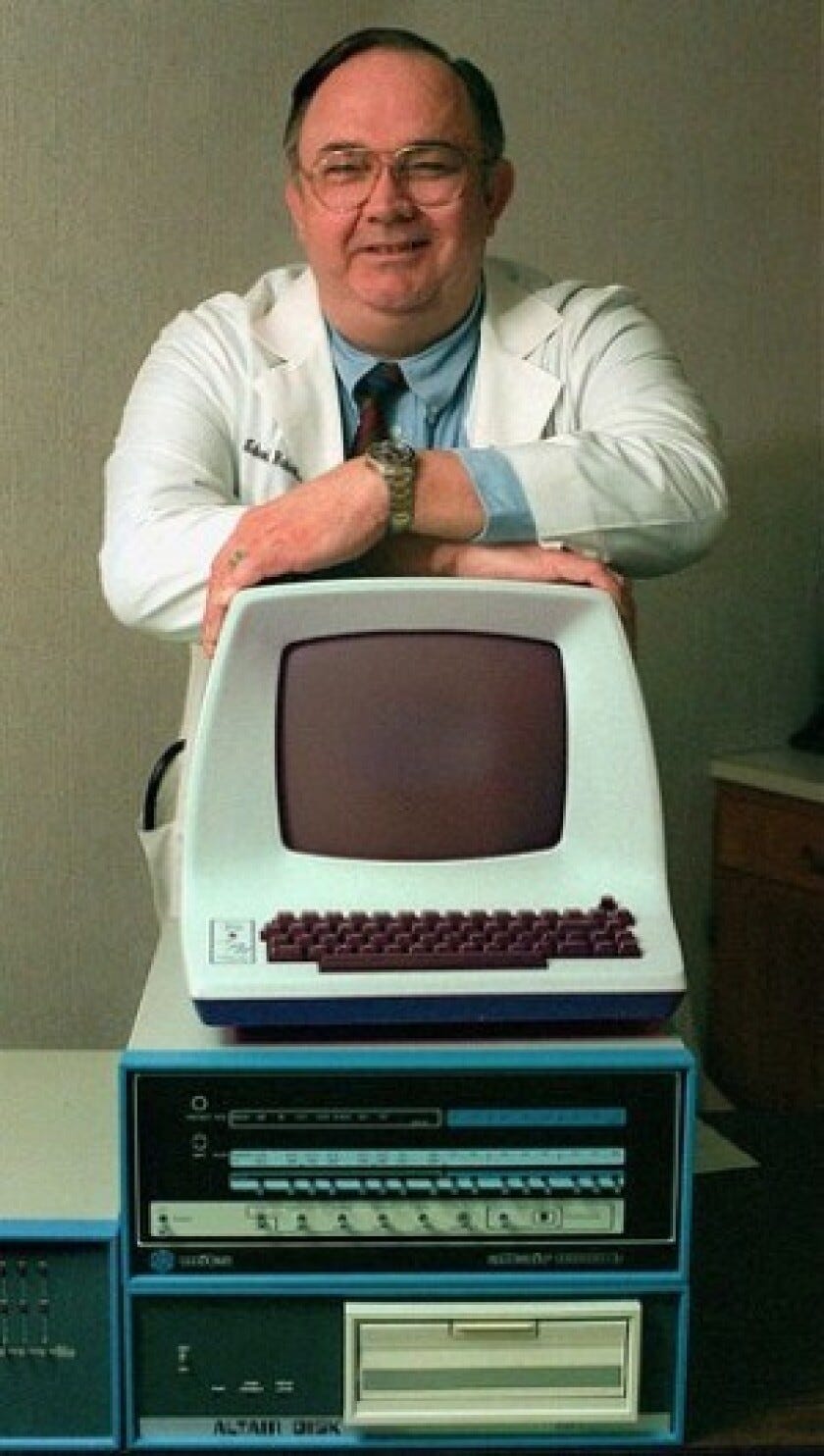
As for Roberts, he moved to Georgia, the home state of his grandparents where he’d spent much of his youth. He became a farmer and a doctor, as had been his goals, and he practiced medicine for the rest of his life.
While MITS was not a long-lived company, the S-100 bus was not a long-lived standard, the Intel 8080 was soon eclipsed by the 8086, the method of operation of the 8800 was tedious, and the physical design of the computer was more similar to a minicomputer than later micros, nearly everything about the PC and workstations of the next 30 years began with the Altair 8800. The expectation of socketed CPUs, upgradable RAM, removable storage, expansion slots, display adapters, communications equipment, operating systems, ready-made availability or DIY. MITS had also been pivotal in early computer shows, users’ groups, newsletters, the software industry and more. MITS traditions continued with S-100 machines remaining somewhat popular until the launch of the IBM PC. But it is arguable that without MITS and the Altair 8800, there might not have been a market for the PC, the Tandy TRS-80, the Commodore PET, or the Apple ][. After all, the Altair was not the first personal microcomputer, it was simply the first successful one, and that success molded what succeeded it.
My dear readers, many of you worked at, ran, or even founded the companies I cover here on ARF, and some of you were present at those companies for the time periods I cover. A few of you have been mentioned by name. All corrections to the record are sincerely welcome, and I would love any additional insights, corrections, or feedback. Please feel free to leave a comment.